Fertility Hormone Testing: What To Test And When

Our bodies hold a wealth of information, much of which can be communicated via labs. When labs are timed correctly and interpreted in the context of your unique cycle, they can become a helpful map guiding you in your fertility journey.
If you have already consulted with a practitioner you may have been told to “get your labs done,” but it can be a struggle to understand what to test for and when. And it can be challenging to connect all of the medical terminology to our own bodies’ rhythms. The truth is that getting familiar with these labs and how they relate to your cycle can reduce stress and confusion and also improve fertility outcomes.
Let’s try and break this down in a way that makes sense.

Why timing matters
When it comes to fertility hormones, timing is everything.
Your hormones are not static. They shift throughout your cycle in a very specific rhythm. Testing on the wrong day can give you a completely misleading picture.
So if you’ve ever had labs come back “normal” but something still feels off… it might just be that the timing of the lab work was off.
Mapping out the cycle

Cycle Day 1 = the first day of full menstrual flow (not spotting)
From there, we map everything based on phases:
Follicular phase (first half of cycle)
Ovulation window (mid-cycle)
Luteal phase (after ovulation)
Each phase tells us something different about how your body is functioning.
Cycle Days 2–4: The Foundation Phase
This is one of the most important windows for fertility testing.
It gives us insight into ovarian reserve, brain-to-ovary communication, and baseline hormone function.
Recommended labs:
FSH
LH
Estradiol (E2)
AMH (can be tested any day of cycle)
Prolactin
TSH
T3 and T4
Thyroid antibodies (TPO, TgAb)
What we are looking at:
How your brain is signaling to your ovaries
How many follicles may be available (ovarian reserve)
Whether estrogen is appropriately low at baseline
Thyroid and pituitary balance
This is your starting point.
If this phase is off, it can ripple through the entire cycle.
Sometimes what we see clinically:
Cycles that are “regular,” but hormones aren’t communicating efficiently
Thyroid antibodies present even when TSH is “normal”
Early signs of diminished ovarian reserve that weren’t previously caught
These are things we can work with—but only if we know they’re there.
Mid-Cycle: The Ovulation Window
This is when the body shifts into movement, growth, and release.
For a 28-day cycle, this is usually around Cycle Days 12–16, but it varies person to person.
Recommended labs or tracking:
Estradiol
LH (or ovulation predictor kits at home)
What we are looking for:
A healthy rise in estrogen
A clear LH surge signaling ovulation
This phase tells us:
If your body actually preparing to ovulate, and getting the signal to do so.
Sometimes what we see:
LH surges that are unclear
Estrogen that doesn’t rise high enough
Ovulation that is delayed or inconsistent
From a TCM perspective, this is often where we see stagnation or lack of smooth flow.
The Luteal Phase
This is when the uterus prepares to either nourish a pregnancy, or begin the menstrual cycle.
Recommended labs:
Progesterone*
Estradiol
What we are looking for:
Strong progesterone production
Adequate support for implantation
*Test progesterone 7 days after you ovulate
Example:
If you ovulate on Day 16 → test on Day 23
Though some doctors may recommend it, progesterone should not be tested on a fixed day like “Day 21” unless you ovulate on Day 14. Always test seven days after your ovulation day.
This phase answers a critical question:
Is ovulation actually strong enough to support a pregnancy?
What we often see:
Ovulation is happening, but progesterone is below the ideal level
Luteal phases that are short
Hormones that rise, but don’t sustain
This can show up as:
Spotting before your period
Short cycles
Early pregnancy loss
Getting into the “deeper layers” (when cycles are not straightforward)
Androgen & Metabolic Testing
Especially important for:
Irregular cycles
PCOS symptoms
Acne or hair growth
Blood sugar issues
Labs (can be done any day, fasting preferred):
Total Testosterone
Free Testosterone
DHEA-S
SHBG
Fasting Glucose
Fasting Insulin
Hemoglobin A1C
Why this matters:
Blood sugar and insulin directly impact ovulation and egg quality.
Even subtle imbalances can disrupt the entire cycle.
Stress & Adrenal Health
We don’t always think of stress as a “lab value”…
but it absolutely shows up in the body.
Optional testing:
Cortisol (AM or 4-point saliva)
DHEA-S
Chronic stress can:
Delay or suppress ovulation
Lower progesterone
Impact implantation
Sometimes the missing piece isn’t another supplement—
it’s helping the nervous system feel safe enough to ovulate.
Recurrent Pregnancy Loss
If you’ve experienced:
2 or more miscarriages
Chemical pregnancies
Early losses
Testing may include:
Immune & Clotting
Antiphospholipid Antibody Panel (APS)
ANA
CRP / hs-CRP
Thyroid & Autoimmune
TSH
Free T4
Free T3
TPO antibodies
Thyroglobulin antibodies
Nutrients & Blood Health
Ferritin
Vitamin D
Vitamin B12
Folate / RBC Folate
Homocysteine
These tests can uncover patterns that aren’t always looked at initially but can provide a snapshot as to what is going on with the body’s endocrine and hormone systems.
Putting it into traditional Chinese medicine terms…
Your cycle is a rhythm.
Follicular phase = building Blood & Yin
Ovulation = movement of Qi
Luteal phase = holding with Yang
When one phase is off, it’s not just a “number on a lab.”
It’s a shift in the overall system.
We as your acupuncturists might see these imbalances as:
Blood deficiency (examples: irregular periods or brown/ scant blood)
Qi stagnation (examples: painful periods, disruptive PMS)
Kidney deficiency (examples: fatigue, weakened immune system, feeling cold)
Dampness or phlegm (examples: fibroids, endometriosis, recurrent yeast infections and UTIs)
Key reminders
We know this is a lot of information so here are some important highlights:
Progesterone must be tested 7 days after ovulation
Thyroid antibodies matter—even if TSH is normal
Lab timing directly impacts accuracy
“Normal” does not always mean optimal for fertility
How does acupuncture fit in here?
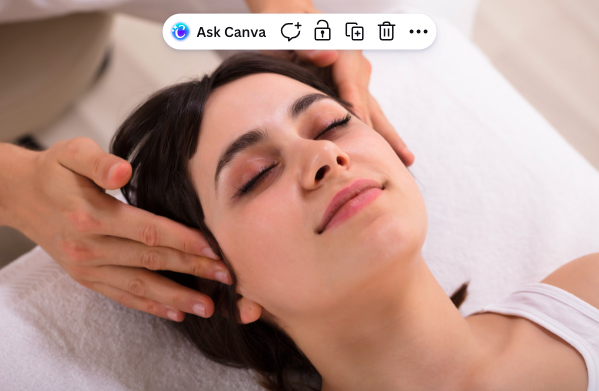
Acupuncture helps your body:
Regulate communication between brain and ovaries
Improve blood flow to the uterus and ovaries
Support hormone balance across the cycle
Reduce stress patterns that interfere with ovulation
Strengthen the luteal phase
In TCM terms, we are:
Nourishing Blood and Yin
Supporting Kidney Jing
Moving Liver Qi
Strengthening Spleen function
In modern terms, many patients notice:
More regular cycles
Better ovulation signs
Improved sleep and digestion
Less PMS and pain
A deeper sense of calm in the process
We hope this can offer a little encouragement and clarity in your endeavors to understand your body’s natural rhythms. And if you find yourself stuck, don’t be discouraged. It takes time and we are always here to answer questions along the way!